Since 1994




Market context: Congo's urban growth and import substitution (2013) The Republic of the Congo, anchored by its capital Brazzaville on the Congo River, entered the 2010s with steady urban expansion — new housing estates, road and bridge works, and public buildings. Domestic demand for concrete blocks and standard bricks was rising, yet most building materials were imported or trucked in from distant neighbours, adding freight, duties and exchange-rate risk to every project. Local contractors needed a dependable, low-cost domestic source of blocks and bricks. Core pain points before the upgrade Import dependence & high cost. Blocks and bricks were largely bought in, so freight, duties and currency swings squeezed margins on fixed-price public tenders. Capacity ceiling. Our older manual line could not clear the larger orders tied to Brazzaville's housing and road push; we left qualified work on the table. Power sensitivity. Local electricity — much of it hydro-based but with unstable supply — made a low-power machine a hard commercial requirement; a heavy automatic line simply did not fit our tariff and uptime profile. Single-product limit. We produced hollow blocks only; standard bricks were outsourced, fragmenting supply and quality control. We needed one compact, low-power line that could deliver hollow blocks and standard bricks locally, with a crew we could actually staff in Brazzaville.
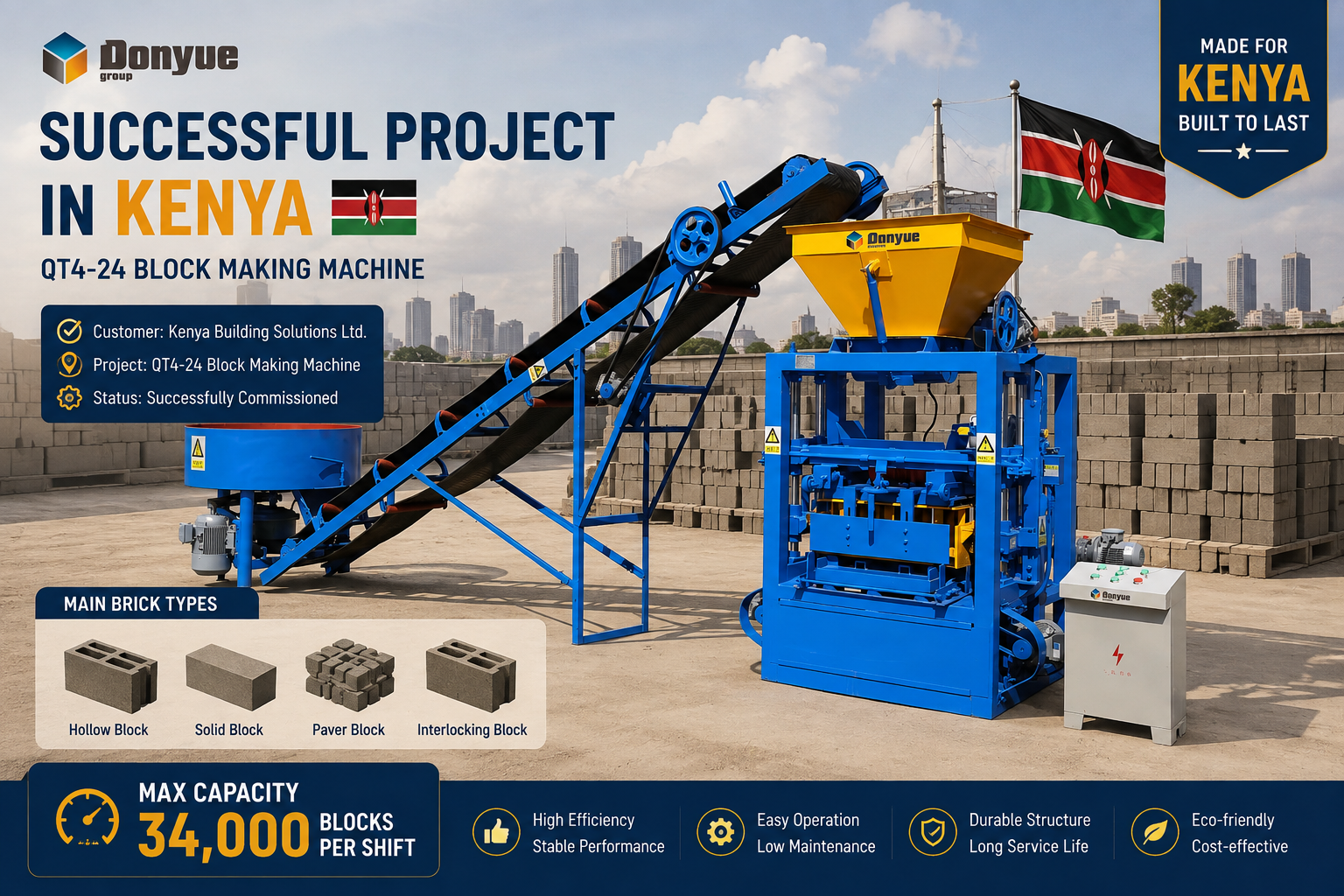
After comparing suppliers in early 2013, we selected the QT4-24 — a mechanical-vibration, semi-automatic block machine well suited to small and mid-size plants, able to produce hollow blocks and standard bricks on one line simply by changing molds, and drawing only 10.58 kW of total power.
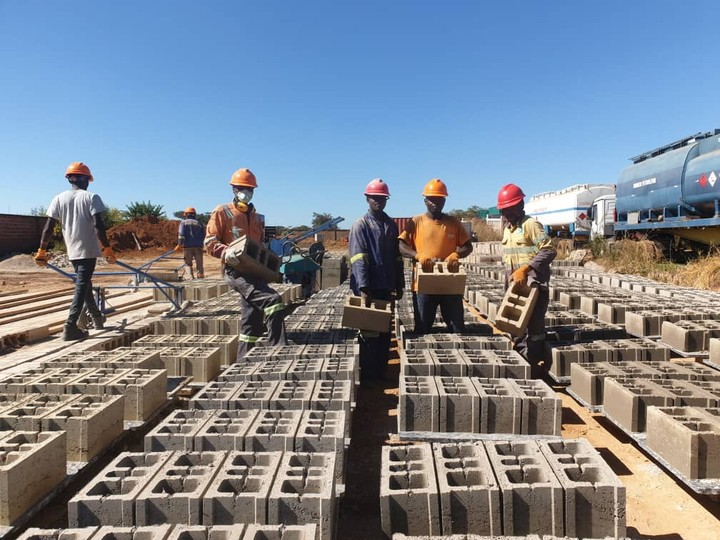
"Dongyue's QT4-24 has been the workhorse of our plant since 2013. It runs our hollow blocks and standard bricks on very little power, the quality is consistent, and more than thirteen years later it is still going strong. For a Congo producer watching electricity cost and uptime, the value-for-money has been excellent."
 EN
EN
 Request Quote
 Download PDF