 EN
EN
How to Start a Brick Manufacturing Business: Setup Guide
Source: Release date: February 01, 2008 View: 1 time




How to Start Your Own Brick Manufacturing Business: A Practical Guide to Building a Block Factory
If you are weighing up a concrete block (non-fired brick) plant, the machine is only one piece. Output, land, power, labor and automation all decide whether the plant actually pays back. This guide walks through each, using real specs from Dongyue’s QT series so you can plan from numbers instead of brochures.
Start from daily block volume, not the biggest model on the price list. Concrete block machines split into four automation tiers:
Manual (QT40-1, QT40-2): 2 workers, about 2,240–2,880 blocks per 8-hour shift, 8.8 kW. Cheapest entry, slowest output.
Mobile / egg-laying (QT40-3A, QTM series): 1–2 workers, no pallets needed, about 2,880–3,840 blocks/8h. Good for on-site jobs and rough ground.
Semi-automatic (QT4-24): about 2,880–3,600 blocks/8h, 13.45 kW, 2 workers. Still needs a pallet-feeder operator.
Fully automatic (QT4-15 and up): one line runs with 3 workers and hits 5,760 blocks/8h (QT4-15) up to 23,040 blocks/8h (QT12-15).
A quick sizing table — 400×200×200 mm hollow block, per 8-hour shift:
Model | Blocks / 8h | Power | Pallet size |
QT4-24 | 2,880 – 3,600 | 13.45 kW | 850 × 550 mm |
QT4-15 | 5,760 – 7,680 | 24 kW | 880 × 580 mm |
QT6-15 | 8,640 – 11,520 | 45 kW | 1,150 × 720 mm |
QT10-15 | 14,400 – 16,800 | 51.2 kW | 1,300 × 900 mm |
QT12-15 | 17,280 – 23,040 | 56.2 kW | 1,400 × 900 mm |
Rule of thumb: blocks per minute ≈ (blocks per pallet × 60) ÷ cycle seconds. If you need 10,000 blocks a day on one shift, a QT6-15 or QT8-15 is the realistic floor; below that, a QT4-15 or QT4-24.
Every QT model is multi-product: change the mould and you switch between hollow block, solid brick, paver and curbstone. Moulds are carburized to 54–58 HRC and rated for 100,000+ cycles.
A block plant is three zones: raw material yard, production workshop, and a curing / storage yard for finished blocks.
Workshop: a small manual line like the QT40-2 fits in about 800 m². A fully automatic QT6-15 / QT10-15 line needs roughly 1,500–2,500 m² of covered workshop plus open curing area.
Layout: the standard flow is batching machine → mixer → belt conveyor → block forming machine → stacker. Keep it straight or L-shaped; a straight line is simpler to run, L-shape saves footprint.
Ground: compact, level concrete. Mobile machines are forgiving; fixed lines need a level foundation for the host and stable supports for the conveyor.
Pallets: fiber (hemp) pallets are the default we ship — 5–6 year life. PVC cracks, bamboo splits, and we do not recommend solid wood.
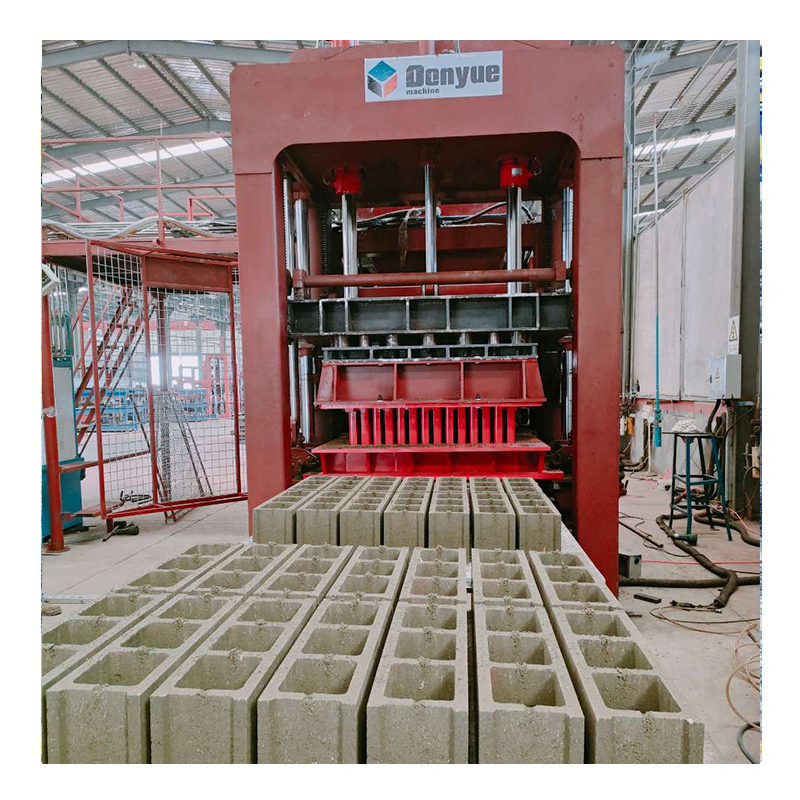
Block machines run on three-phase power; voltage is matched to your grid (220 V / 380 V / 440 V all work with the right motors).
QT6-15 class: transformer 80–100 KVA, main cable 3×25 mm² copper, leakage protector 100 A ×2 (or 200 A ×1).
QT10-15 class: transformer 100–150 KVA, main cable 3×35 mm² copper.
Add a 7 kW air compressor for the pneumatic parts.
Hydraulic oil: No. 68 in hot climates, No. 46 where it gets cold; one line consumes about 3 barrels (170 kg each) to fill. Keep oil temperature under 50 °C.
Get the transformer sized before the machine ships — it is the one thing that halts commissioning if left for last.
Automation level sets headcount more than anything else:
Fully automatic line: 3 people — one at the control cabinet, one moving empty pallets with a forklift, one moving finished blocks.
Semi-automatic: 5 people (batching, host / stacker, pallet handling, loader, forklift). Mobile: 1–2. Manual: 2.
Most new owners over-budget labor and under-budget a good forklift operator. That forklift role is what actually limits daily output on a 3-person line.
“Automatic” means a PLC controls the whole line: feeding, vibration, mould release, pallet feeding and stacking, with fault diagnosis on screen. On Dongyue lines the PLC is Mitsubishi or Siemens, paired with:
Yuken (Japan) hydraulic valves; ABB cross switches; Omron travel switches; Siemens / ABB motors.
QT4-15 and above add a frequency inverter (smoother start, longer motor life) and a 360° rotating stainless feeder that handles wet and dry mix. QT8-15 and above use a sync box for even vibration and a buffer valve; QT10-15 and above add servo drives and larger cylinders for denser, cleaner face bricks.
What that buys you: steadier block density, less scrap, and far fewer hands. A QT4-15 at 24 kW does the daily output of a manual line at a fraction of the labor — that is the usual payback case.
Standard concrete block mix: cement : sand : crushed stone ≈ 1 : 3 : 6 (or 1 : 4 : 5). Drop cement to 5–8% to cut cost where the local standard allows.
Greener and often cheaper feeds: fly ash, slag, cinder, even construction waste — these replace part of the stone / sand and tick the environmental box many tenders now require. A common fly-ash mix is 8–10% cement, 30% fly ash, 60% sand or stone powder.
Cement is usually stored in a 40–100 ton silo and screw-conveyed into the mixer; everything else is batched by a PLD-series batching machine (bigger number = bigger hopper).
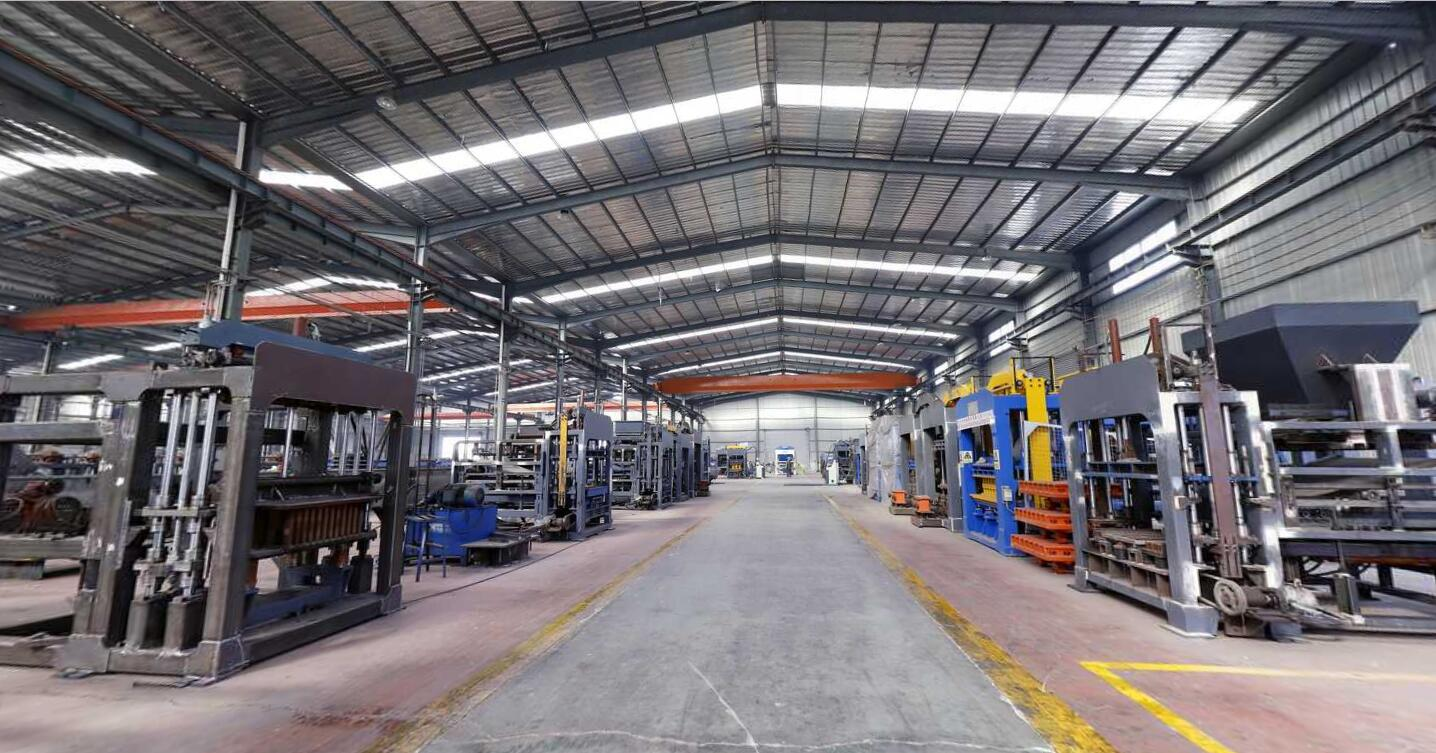
Before the container arrives, have the transformer, wiring, hydraulic oil, gear oil and grease on site. On arrival: check the item count against the contract, sign the acceptance list, then place and level the host, align the pallet feeder to the vibration-table center, fill the hydraulic tank to mid-level, and run empty cycles before making blocks.
Dongyue sends an engineer for on-site installation and operator training where needed, and runs overseas offices (India, Indonesia, Vietnam) with a spare-parts warehouse in India — useful if you are in those regions.
Say your target is 10,000 hollow blocks per 8-hour shift:
Machine: QT6-15 (8,640–11,520 / 8h) or QT8-15 (11,520–15,360 / 8h) — QT6-15 is the tighter budget, QT8-15 gives headroom.
Land: about 2,000 m² covered plus curing yard.
Power: 80–100 KVA transformer, 3×25 mm² main.
People: 3 (automatic line).
Support gear: PLD batching machine, JS500 / JS750 mixer, 8 m belt, fiber pallets, one forklift.
Moulds: start with hollow-block and solid-brick moulds; add a paver mould later if the market wants it.
That is a realistic one-shift plant. Scale the transformer, land and headcount up in step with the model table above.
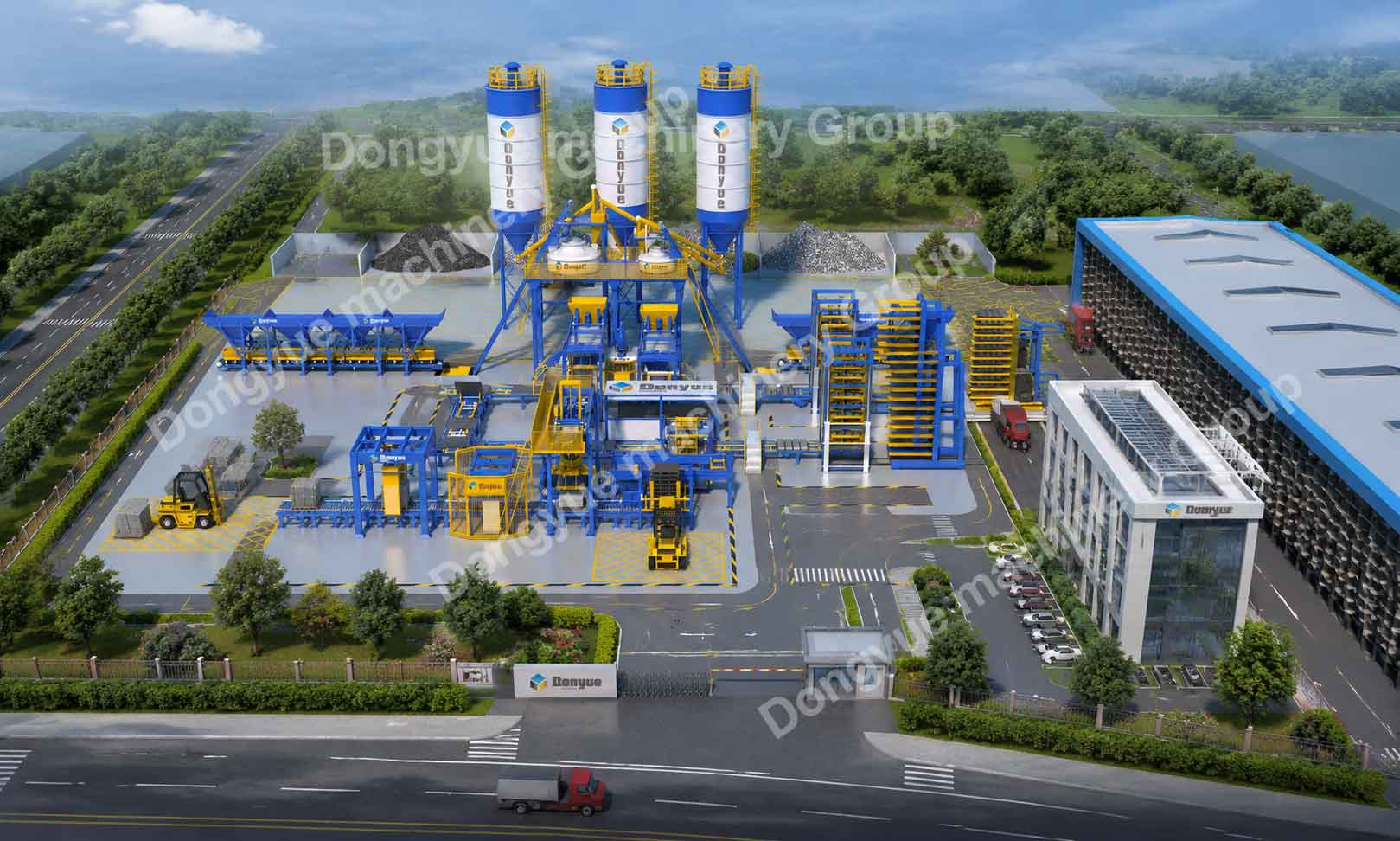
A small manual line fits in about 800 m² of workshop. A fully automatic QT6-15 or QT10-15 line needs roughly 1,500–2,500 m² of covered workshop plus an open curing yard. Plan three zones from day one: raw material yard, production workshop, and curing / storage area.
100–150 KVA with a 3×35 mm² copper main cable and a 100 A ×2 (or 200 A ×1) leakage protector. Size the transformer before the machine ships so commissioning is not delayed.
A fully automatic line needs 3 people: one at the control cabinet, one moving empty pallets with a forklift, one moving finished blocks. Semi-automatic needs about 5; mobile 1–2; manual 2.
Size by daily blocks, not price. About 3,000 / 8h → QT4-24; 6,000 / 8h → QT4-15; 10,000 / 8h → QT6-15 or QT8-15; 15,000+ / 8h → QT10-15 or QT12-15. All figures use the 400×200×200 mm hollow block basis.
Yes. Fly ash, slag, cinder and construction waste can replace part of the sand / stone, often at lower cost and with a green-building advantage. A typical fly-ash mix is 8–10% cement, 30% fly ash, 60% sand or stone powder.
Dongyue moulds are carburized and heat-treated to 54–58 HRC, rated for 100,000+ cycles (some cited at 120,000+). Life depends on mix abrasion and cleaning discipline.
If labor is cheap and output modest, semi-auto (QT4-24) saves capital. If you need 6,000+ blocks / 8h with 3 workers and consistent density, a fully automatic QT4-15-and-up line pays back through labor and scrap savings.